
THEY were meant to be Britain’s last line of defense in the event of a German invasion. Obstacles known as Admiralty Scaffolding were deployed on beaches along the south coast to prevent Nazi tanks storming ashore after being shipped across the Channel.
Many of the barriers were placed at or just above the high water mark to prevent tanks gaining enough momentum to break through. They were installed in 1940-41, when a German invasion was thought to be imminent and the rapid construction of fortifications left much of southern England looking like a battlefield.
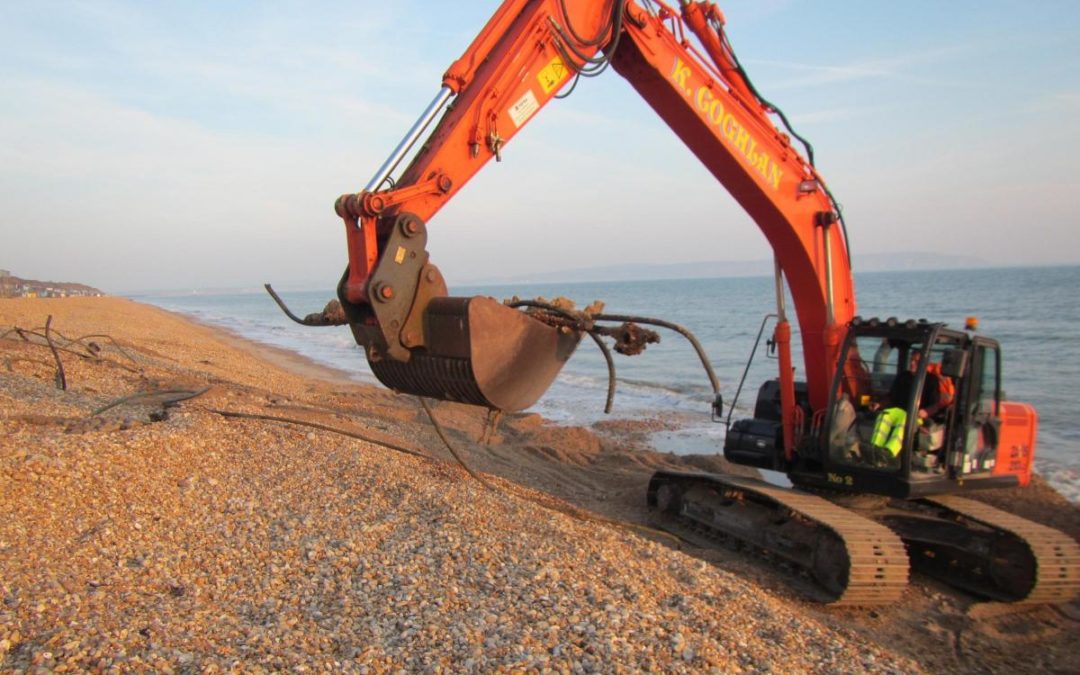
Kevin Coghlan Plant Hire and Transport is using two Hitachi 21-ton excavators – one of which is fitted with a long arm that gives it a reach of 30 meters
The spokesman said:
“The excavator is positioned just above the waterline at low tide and reaches into the sea to lift out the metal. A second excavator is fitted with a griddle bucket that resembles a giant sieve. The machine sifts out the sand and pebbles and retains the metal, which is deposited in a compound for removal.”
Some of the barriers were left in place after the war ended in 1945.
A council spokesman said: “The jagged metal defenses are partially buried in the sand just below the waterline but emerge periodically due to beach erosion caused by rough weather.
“The Spring tides allow heavy machinery to access parts of the beach that are usually under water.”
Admiralty Scaffolding was placed on the beach by the Wiltshire Regiment in 1940-41.
“Over the decades much of the structure disappeared below the sea bed but constant coastal erosion caused new sections to reappear regularly,” said the council spokesman.
“For the last nine years the council has been removing them as they emerge. Further removal is scheduled for the next Spring tide from April 24.”
Southampton and the New Forest were a hive of activity during the war, with most of the action taking place during the build-up to the D-Day landings in 1944.


